Privacy Policy Notice

Thank you for visiting Philippine Veterans Bank!

Our website uses cookies to enhance your visitor experience.

In some pages of the website, we may need to ask for your data to process your request or inquiry. To know more and to find out how we collect, store, and handle data, please read our Privacy Policy Notice.

By continuing to navigate our website, you agree to the use of cookies and the use of your personal data pursuant to our Privacy Policy.

Corporate Governance

Corporate Governance

Veterans Bank is guided by corpoate governance principles anchored on fairness, accountability, transparency, and integrity, which establish a framework for the governance of its Board of Directors and its Management.

It has a Corporate Governance Manual in which its governance principles is aligned with the regulation of the Bangko Sentral ng Pilipinas and Securities Exchange Commission. The Bank fully comply with the provisions of the regulation.

ACGR


CORPORATE GOVERNANCE MANUAL

...

READ MORE

Board Charter

The charter of the Board articulates the governance and oversight responsibilities exercised by the directors and their roles and functions in the Bank. It includes provisions on Board composition, Board committees, and Board governance, subject to provisions of the corporation’s Articles of Incorporation, By-laws, and applicable laws. The Board charter is not intended to limit, enlarge, or change in any way the responsibilities of the Board, as determined by such articles, by-laws, and applicable laws. The Board charter of the Bank is incorporated in its Corporate Governance Manual.


...

READ MORE

Board Committees

July 2024 - March 2025


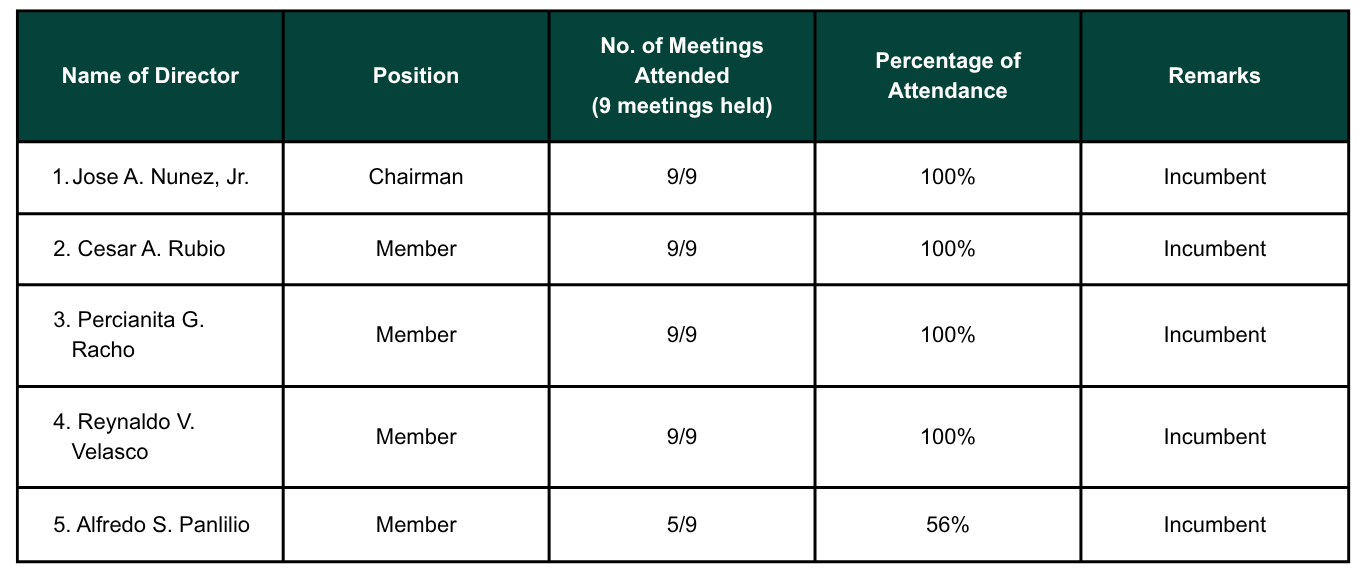
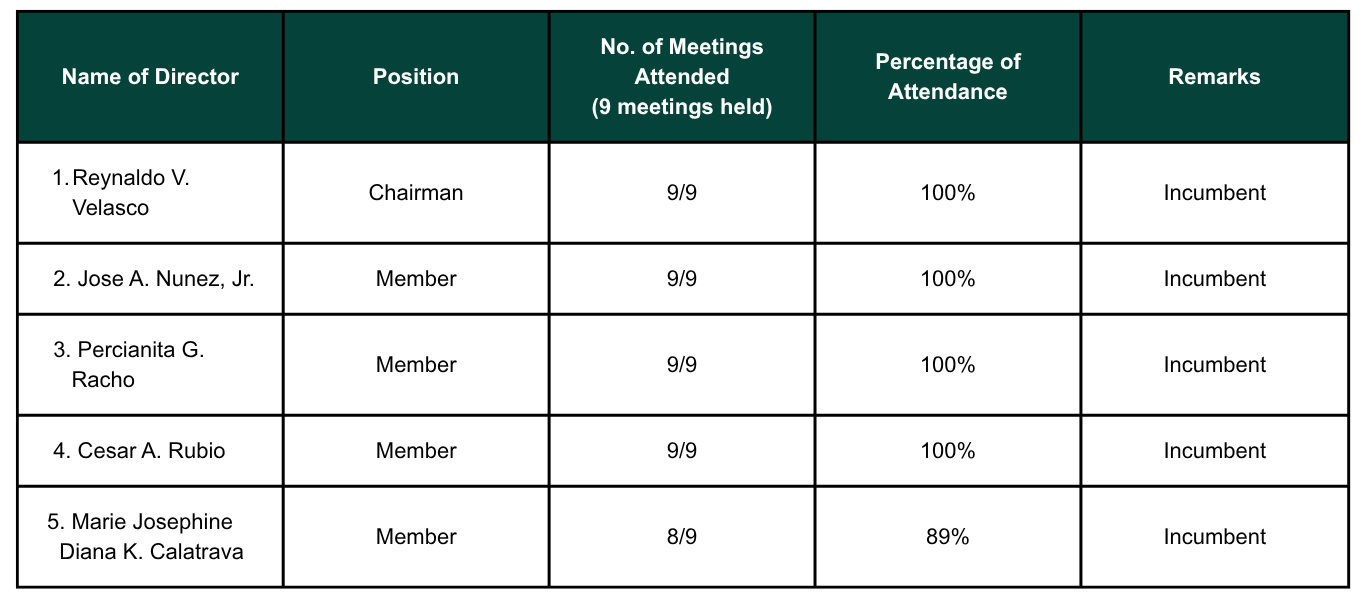
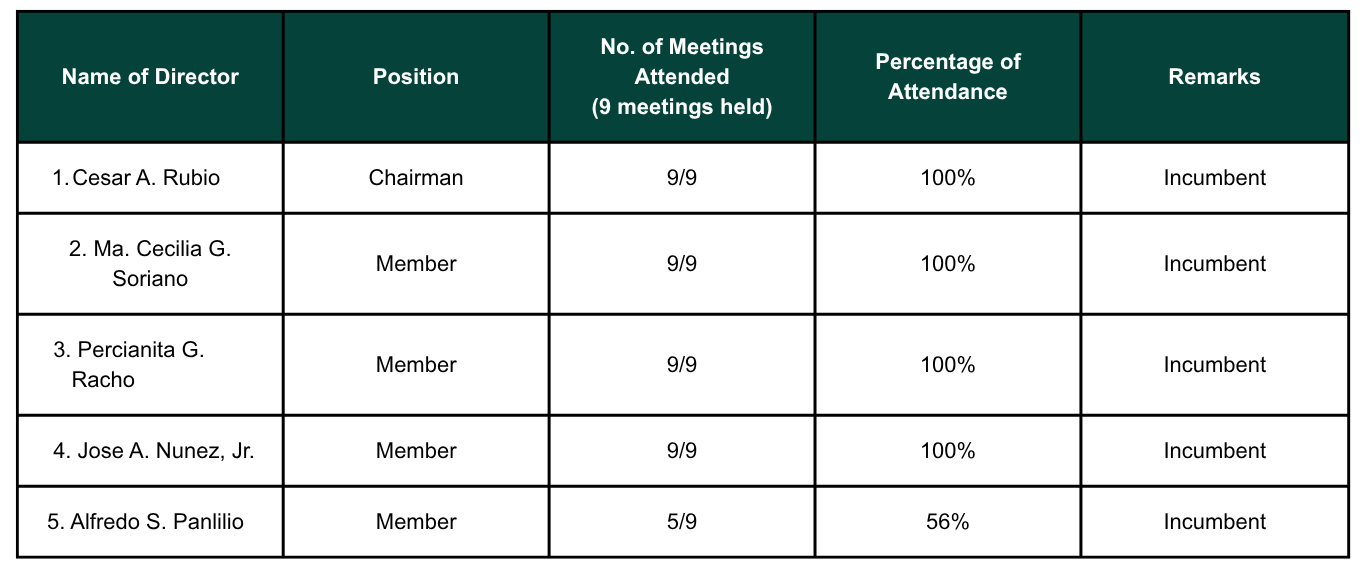
To assist the Board in competently acting upon its responsibilities, it established 11 committees, namely:

  • Executive Committee (EXECOM)
  • Corporate Governance & Compliance Oversight Committee (CGCOC)
  • Related Party Transactions (RPT) Committee
  • Remuneration Committee (REMCOM)
  • Audit Committee (AUDITCOM)
  • Risk Management Oversight Committee (RMOC)
  • Credit Committee (CRECOM)
  • Human Resources Committee (HRCOM)
  • IT Steering Committee (ITSC); and
  • Asset Disposal Committee (ADCOM)
  • Trust Committee (TRUSTCOM)


Executive Committee (EXECOM)


Corporate Governance & Compliance Oversight Committee (CGCOC)


Related Party Transactions (RPT) Committe


Remuneration Committee (REMCOM)


Audit Committee (AUDITCOM)


Risk Management Oversight Committee (RMOC)


Credit Committee (CRECOM)


Human Resources Committee (HRCOM)


IT Steering Committe (ITSC)


Asset Disposal Committee (ADCOM)


Trust Committee (TRUSTCOM)


...

READ MORE

Board Composition

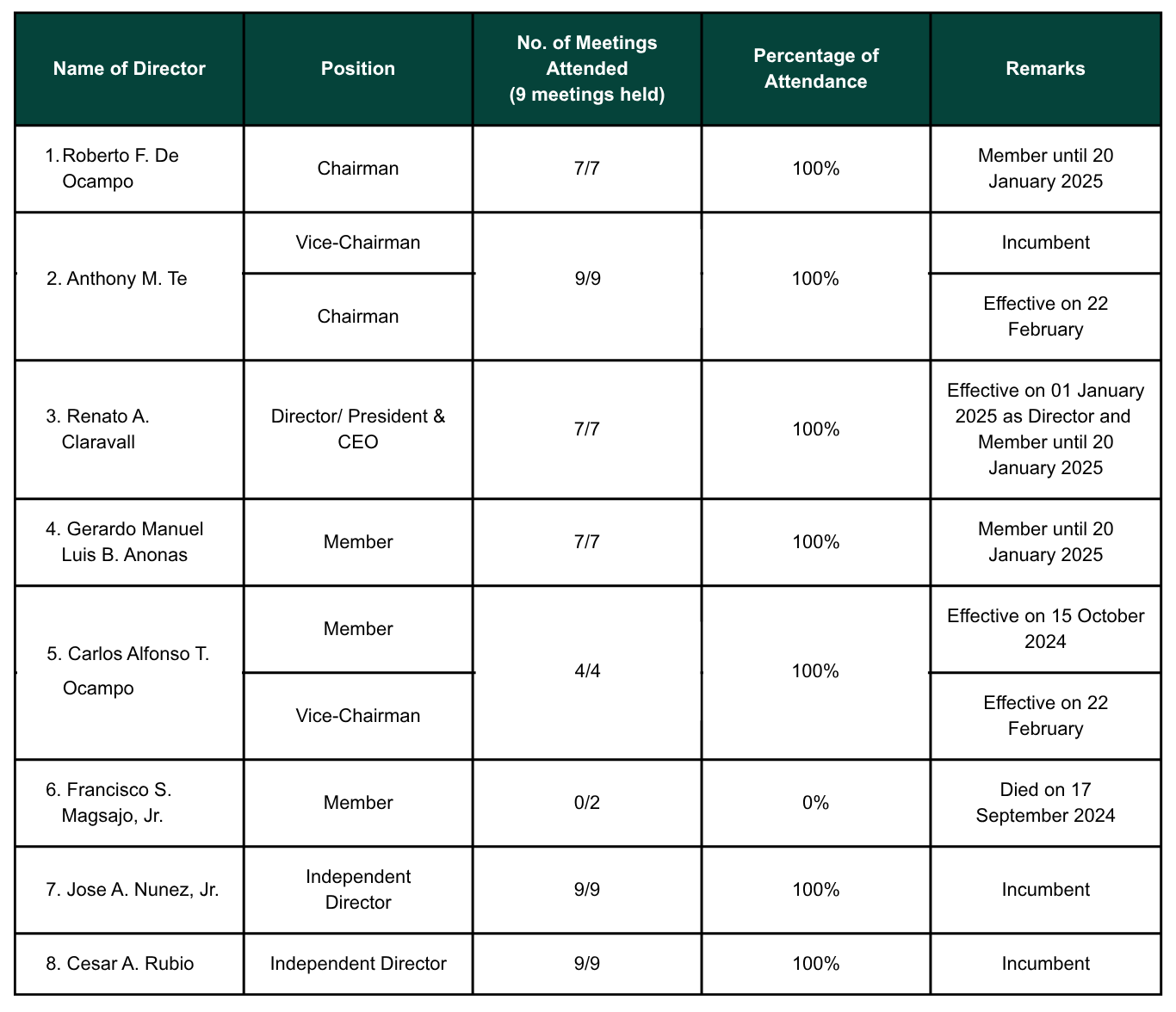
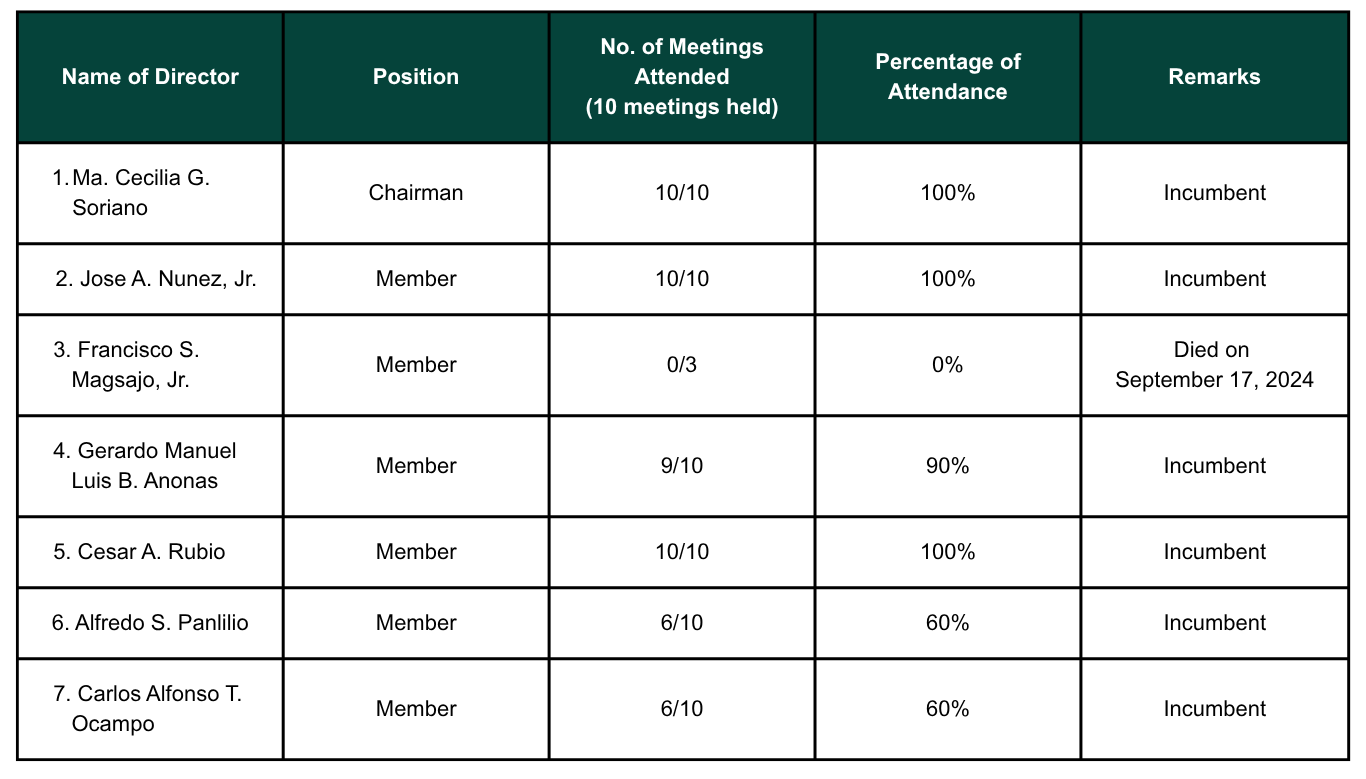
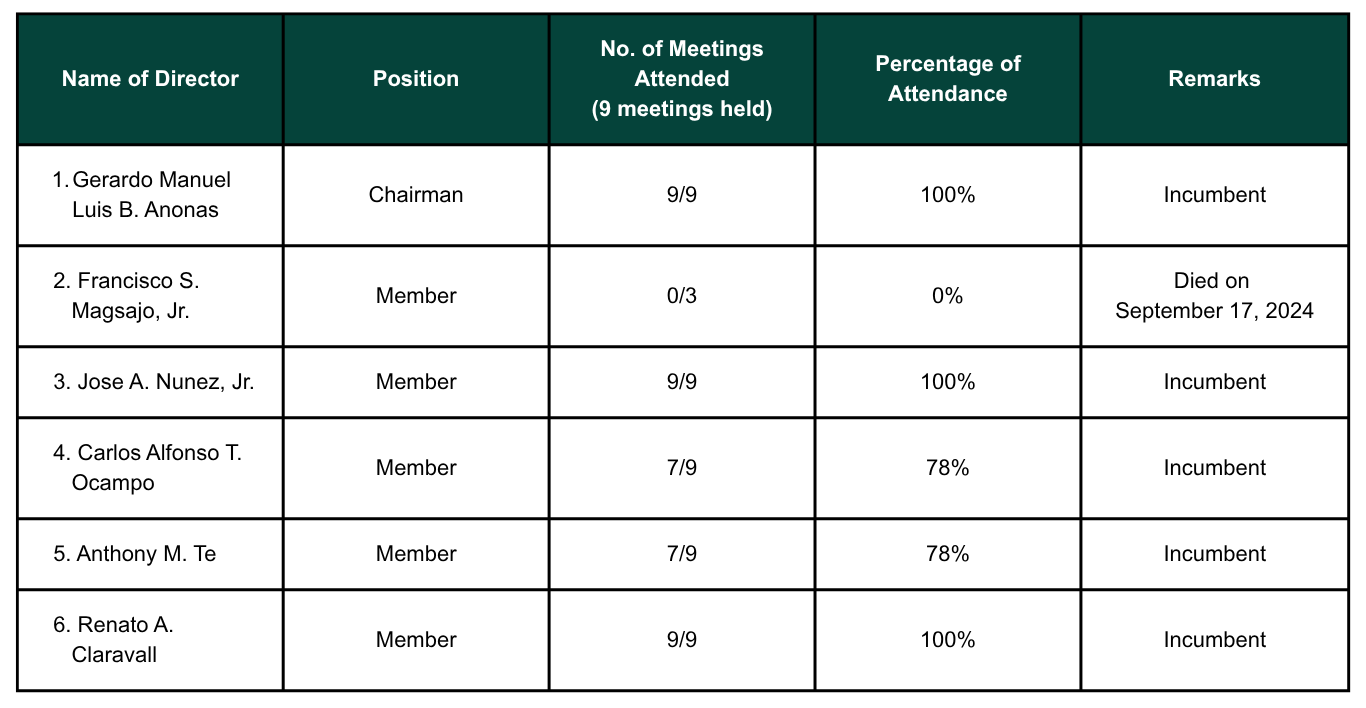
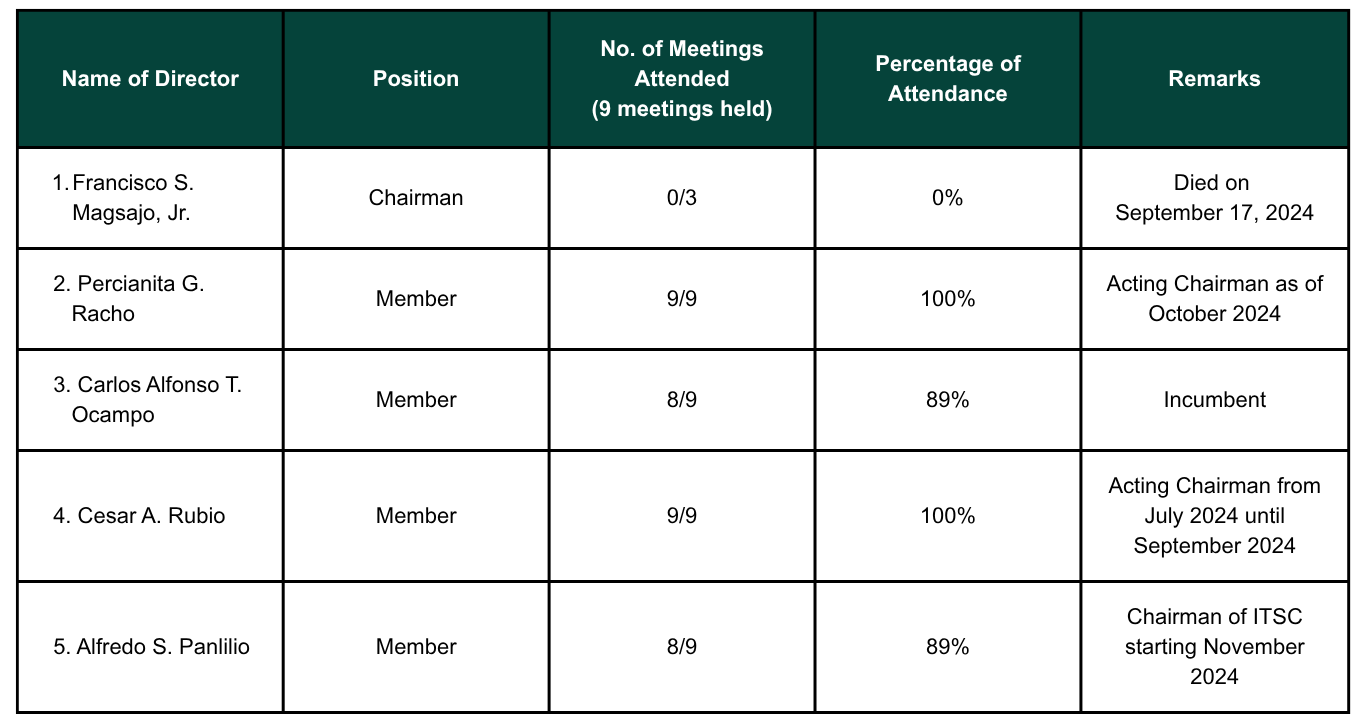
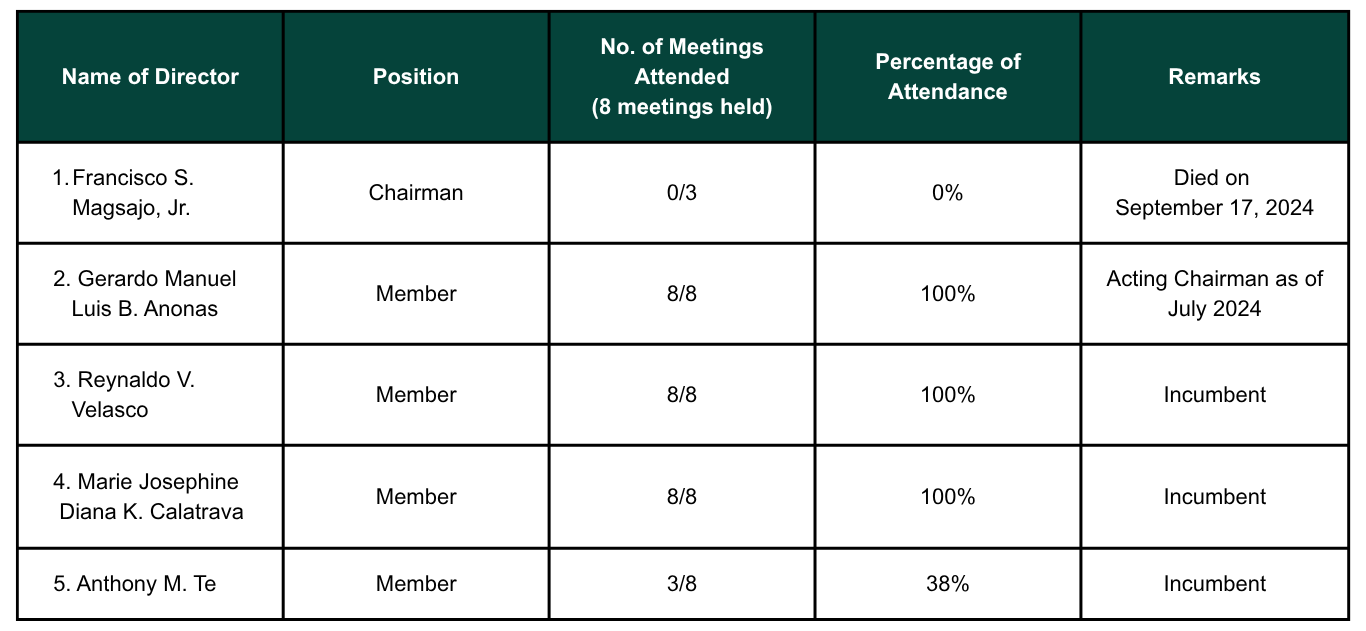
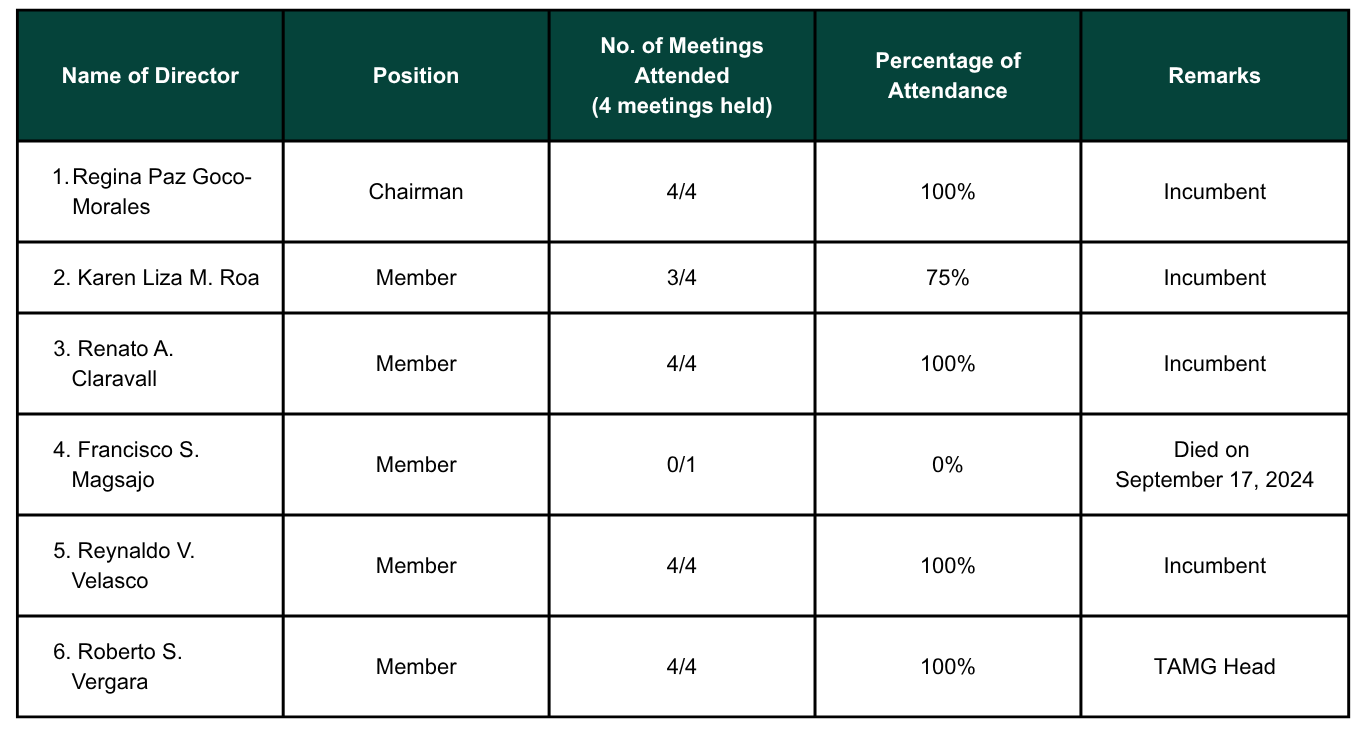
In January and March 2025, Atty. Carlos Alfonso T. Ocampo, Alfredo S. Panlilio and Anthony M. Te were elected as new directors, respectively. In September 2024, Mr. Francisco S. Magsajo, Jr. passed away.

...

READ MORE

Board of Directors

The primary duty of the Board of Directors is to provide the Bank’s overall leadership, strategic oversight, and control environment to achieve its ultimate goal of maximizing long term value for shareholders while considering sustainability for its stakeholders and adhering to the principles of good governance and accountability. Board succession is ensured by the Nominations Committee, which is tasked to conduct prescreening through assessment against policies and regulatory requirements. Upon the conclusion of the vetting process, a final list is prepared in which nominee details required by law are made available to the appropriate government agency. Further, the Board ensures that a system of checks and balances is in place so that risks are identified, prevented, or mitigated. The Board is also expected to set the tone from the top in terms of shaping the company culture. The Board Chairperson works closely with the President & Chief Executive Officer. This complementary relationship provides appropriate balance of power, increased.


...

READ MORE

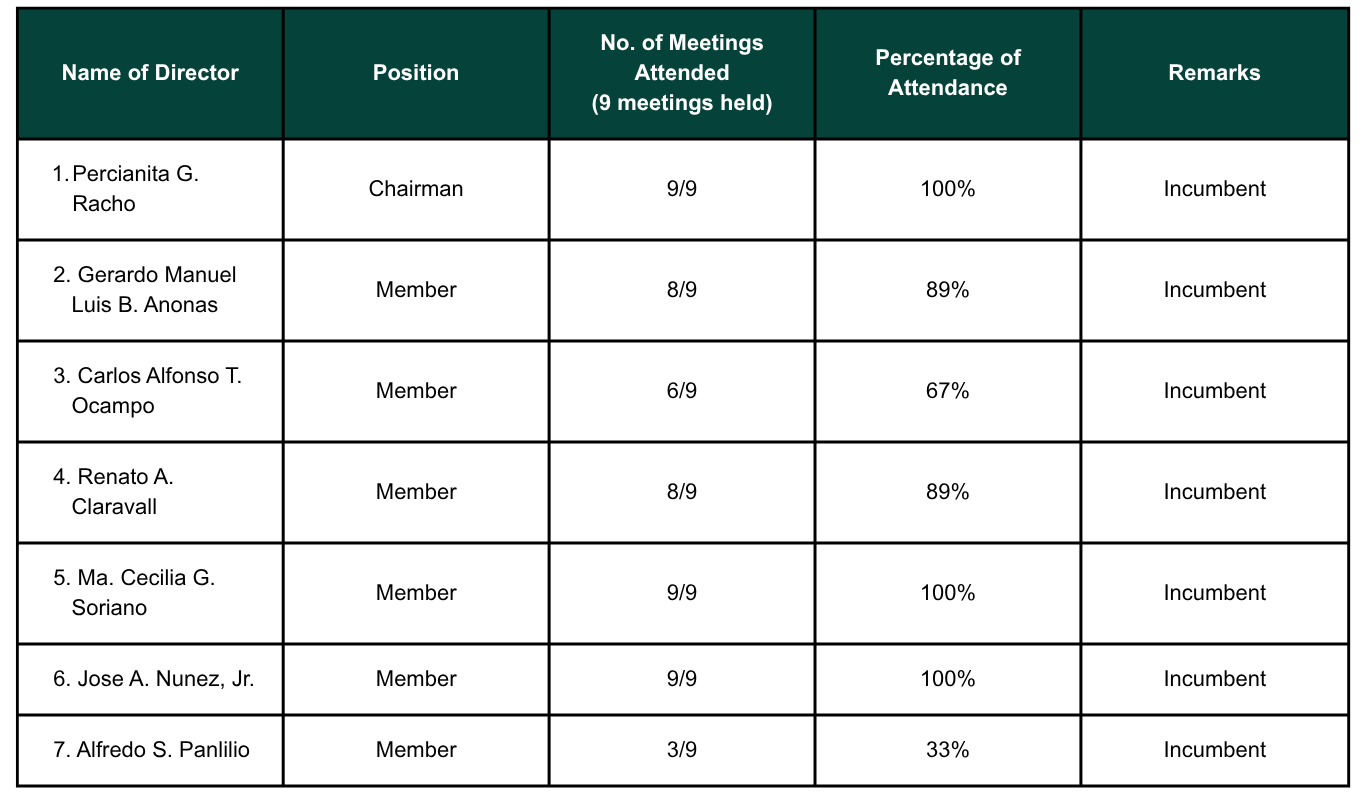
Board of Directors Meetings and Attendance

July 2024 - March 2025

...

READ MORE

Compliance and Money Laundering Prevention

The Bank, through its Compliance Group, remains dedicated in continuously strengthening its money laundering and terrorist financing prevention through regulatory compliance and adopting best practices in the industry. Among its initiatives are:

  • Improved Compliance and AML awareness by:
    • Continuous conduct of orientation of CLOs, post-implementation training of  AML system and focus group discussions on AML and the new circular/issuances;
    • Issuance of AML bulletins and advisories;
    • Provide consulting/advisory to Line Units on business program/project prior to implementation 
  • Enhanced the monitoring and review processes through:
    • Implementation of the AML system and its upgrade and improved CTR/STR/ Alerts review processes;
    • Establishment of a trigger mechanism to alert/prompt the concerned units on the timely submission of regulatory reports;
    • Creation of the Compliance Regulatory Matrix, timely cascading and uploading of regulatory issuances in the Compliance Desk Facility;
  • Strengthened compliance mechanism through the designation of a Compliance Liaison Officer (CLO) per Unit/Branch tasked to periodically conduct self-assessment to determine their Unit’s/Branch’s state of compliance with relevant banking rules and regulations and promptly address compliance issues and concerns.


...

READ MORE

Consumer Protection

The Bank ensures an environment that protects the rights of financial consumers and implements measures under the conditions of fair treatment, disclosure and transparency, protection of consumer assets against fraud and misuse, data privacy, timely handling, and redress of complaints.


The Bank shall at all times adhere to the following Consumer Protection Standards of Conduct:

  • Disclosure and Transparency. The Bank shall provide financial consumers all the information that accurately represents the nature and structure of the product or service, its terms and conditions, as well as its fundamental benefits and risks. It also applies to financial products and services offered electronically and to financial products catering to different market segments, with particular consideration to segments where financial knowledge may be limited.

a. Disclosure of information on financial products or services shall be available to the public through available channels of the bank.

b. The way information is disclosed, in advertising materials, terms and conditions, and other forms of communication are clear, concise, accurate, understandable and not misleading. Client segments with limited financial knowledge or certain disabilities or deficiencies that prevent them from reading or understanding the proposed written contract are given a clear verbal explanation of the terms and conditions, as well as its features, risks, and costs, in a language they can understand.

c. The Bank shall notify clients of any change in terms and conditions of the products/services not later than 60 days prior to effectivity of the change.

  • Protection of Client Information. The bank has existing Information Security and Data Privacy policies to safeguard client information and Code of Conduct to ensure that all employees comply with these policies and infractions are properly dealt with.
  • Fair Treatment. The Bank shall not discriminate against Clients on the basis of race, age, financial capacity, ethnicity, origin, gender, disability, health condition, sexual orientation, religious affiliation and practice, or political affiliation.
  • Effective Recourse. Financial Consumers should be provided with accessible, independent, fair, accountable, timely, and efficient means for resolving complaints, inquiries, and requests about their financial transactions.
  • Protection of Consumer Assets against Fraud and Misuse. The Bank shall provide financial education and awareness to clients by providing the necessary information on protection of their assets and prevention of fraudulent or unauthorized transactions. The Bank shall adequately inform Financial Consumers of their responsibilities, as users of financial products and services, and provide timely transaction notifications which are essential in curtailing and detecting fraudulent or unauthorized transactions.


...

READ MORE

Corporate Social Responsibility

At the core of Veterans Bank’s corporate citizenship is its social responsibility to the Filipino veteran and his family and to preserve and nurture the legacy of the Bank’s shareholders. PVB’s revitalized charter retains the mandate that the Bank allocate 20% of its annual net income for the benefit of veterans, their widows, orphans, and compulsory heirs as “grants-in-aid” coursed through the Board of Trustees of the Veterans of World War II (BTVWWII). This annual grant is intended to better the welfare of the veteran community and may be used for educational, social, charitable and rehabilitation purposes in partnership with organizations that share PVB’s commitment to uplift the lives of veterans and their families.


...

READ MORE

Equitable Treatment of Shareholders

As a matter of policy, the Bank treats all its shareholders equally or without discrimination. Likewise, the Bank gives its shareholders the right to participate in shareholders meetings and to be informed of matters that relate directly to the business of the Bank.


The Bank owes its very existence to the hundreds of thousands of World War II veterans and their families, who are also the Bank’s shareholders. In upholding its unique legacy, PVB has embraced as part of its values and beliefs the principles of moral integrity, professionalism, and honor as demonstrated by our Filipino veterans of World War II, our nation’s heroes.


...

READ MORE